Dog Sledding with Carts vs snow sledding: What’s the difference?
11 June 2026
Dog sledding is one of the most popular activities in the Arctic and a must-do for many travelers visiting Tromsø. However, depending on when you travel and the snow conditions you can encounter two different options: dog sledding with carts during autumn (from mid-September and throughout November) and traditional dog sledding on snow during winter (from December until late March or early April).
You may wonder which option is best. We came up with a guide to help you understand the differences between autumn and winter dog sledding tours and help you decide which experience is right for your Arctic holiday.
The tradition behind dog sledding
Dog sledding in Norway dates back millennia (between 8,000 to 10,000 years), originating from an indigenous Sami and Arctic survival necessity. Sled dogs helped people travel across snowy landscapes, transport supplies, and reach areas that would were inaccessible during winter. Today, dog sledding remains an important part ofArctic culture and heritage.
Why are there two types of dog sledding?
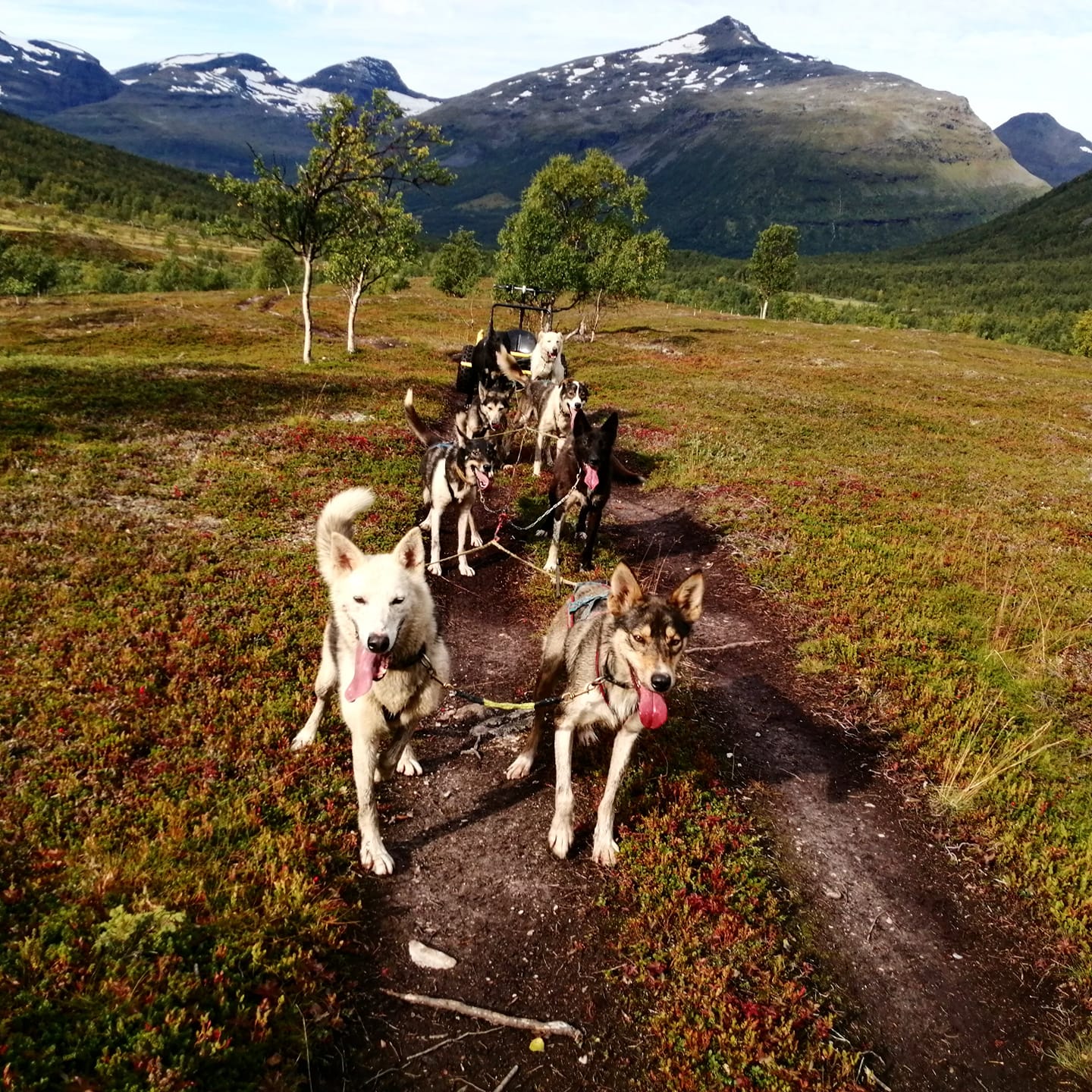
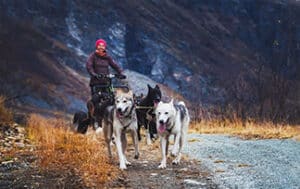
You could tend to think that dog sledding on wheels is just a substitute for the “real” dog sledding. In reality, huskies need regular exercise and training throughout the year. During autumn in Northern Norway, temperatures become cooler and ideal for the dogs to run, but there is often not enough snow on for traditional sleds. This is where dog sledding carts come in. Wheeled carts allow the dogs to train safely before winter arrives. For travelers, this is a great opportunity to experience dog sledding from September until enough snow arrives.
What to expect from dog sledding with carts?
If you’re visiting Tromsø in autumn and want to join a dogsledding tour with carts, you can check here our available autumn dog sledding tours.
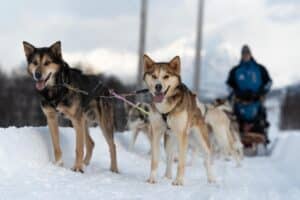
Although it may seem very different from traditional dog sledding, the core of the tour remains exactly the same. You’ll still meet the huskies, learn how to be a good musher, and discover the enthusiasm and the playfulness of the dog team.
The most notable difference is the landscape. Instead of sledding through fully white snow-covered areas, you’ll be surrounded by autumnal nature and colors. Fall brings golden and red shades to the trees and vegetation. In the backdrop, the first snowy peaks of the season may appear.
Autumn in the Troms region typically brings cool and stable temperatures, making it an ideal season for the huskies to run. Between September and November, daytime temperatures generally range from +10°C in early autumn to around -5°C by late November. While the first snowfall often appears on surrounding mountain peaks, lower-altitude trails may remainsnow-free for several weeks. The comfortable temperatures create excellent conditions for dog sledding with carts before winter fully arrives.
Our tours are available to book both with and without transfer from Tromsø to best address your needs. Read more about our dog sledding tours with carts here.
Why choose dog sledding with carts?
Available during autumn before the first snowfall
Experience a more colorful side of the Arctic
Meet and interact with the huskies
Ideal if you’re travelling outside the winter season
Less tourists and reduced prices
The traditional dog sledding on snow
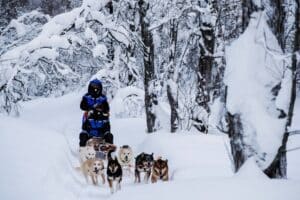
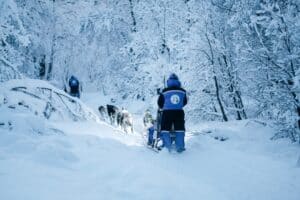
For many visitors, dog sledding on snow is the Arctic adventure they have always imagined. The dogs will guide you along snowy trails across forests, valleys and open mountain areas. Winter gives another dimension to the experience. Snow-covered trees, frozen landscapes, and the soft Arctic light often reflect what you imagined of a dog sledding tour.
The interaction with the dogs remains one of the highlights of the trip. You’ll have the opportunity to meet the huskies, learn about their training, and discover their love for running through the wild trails.
Winter dog sledding is generally available from late November or December until spring (March or beginning of April), depending entirely on snow conditions. Since every season is different, the exact start date can vary from year to year. Winter in Northern Norway transforms the landscape. From December through March, temperatures in the Tromsø area typically range between -10°C and +2°C, although colder periods can occur. Sufficient snow cover is essential for traditional dog sledding, which is why tours generally begin once winter conditions are firmly established.
Read more about our winter dog sledding tours here.
Why choose dog sledding on snow?
Experience the classic dog sledding experience
Discover snow-covered landscapes
Perfect if you’re travelling during the winter season
Less tourists and reduced prices
Which dog sledding experience to choose?
The answer depends mainly on when you are visiting Tromsø and what type of scenery you’re looking for.
If your priority is experiencing traditional Arctic winter scenery, snow sledding is the obvious choice. The snowy surroundings create the classic postcard image many travelers dream about.
However, if you’re visiting in autumn, dog sledding with carts is far more than just a substitute. Many guests appreciate seeing the dogs in training, enjoying the colorful landscapes, and experiencing the Arctic before the winter season begins. The adventure remains authentic, exciting, and memorable.
Most importantly, both experiences allow you to connect with the huskies, learn about mushing culture, and enjoy Norway’s landscapes.
Share this article on your social networks:
Explore more Arctic adventures
How far from Tromsø do Northern Lights tours go?
If you book a Northern Lights tour from Tromsø, you might be surprised by how far you travel to find clear skies. Northern Lights tours can stay relatively close to Tromsø when conditions are good, but on more challenging nights they may travel several hours away from the city in search of clearer weather. At […]
Northern Lights minibus vs boat tour: which is better?
If you are planning a trip to Tromsø to see the Northern Lights, one of the first decisions you may face is whether to book a Northern Lights minibus tour or a boat tour. Both allow you to leave the lights of Tromsø behind and experience the Arctic night, but they offer very different experiences. […]
Watching the Northern Lights together can be one of the most memorable experiences of a family trip to Northern Norway. Tromsø sits within the aurora oval and offers many ways to experience the Aurora Borealis, whether your family prefers a classic Northern Lights chase, a smaller group, a comfortable boat trip or even a private […]
7-Day Rovaniemi and Tromsø itinerary for Northern Lights travelers
If you’re planning a winter holiday in the Arctic, combining Rovaniemi, Finland, and Tromsø, Norway is one of the best ways to experience the magic of Lapland while maximizing your chances of seeing the Northern Lights. Both destinations lie within the Auroral Oval, making them excellent places to hunt the aurora. Each offers a unique […]
If you’re visiting Tromsø in September, October or early November, you might think it’s too early for dog sledding. After all, the Arctic winter hasn’t fully arrived yet. Fortunately, that’s not the case. Autumn dog sledding with carts (also called dog carting or wheeled dog sledding) lets you experience the excitement of being pulled by […]
Bus vs flight the smartest way to travel between Tromsø and Rovaniemi
Are you planning a winter journey between Tromsø in Northern Norway and Rovaniemi in Finnish Lapland this winter? Although flying may initially appear to be the fastest option, the total travel experience involves much more than the time spent in the air. Traveling by bus between Tromsø and Rovaniemi can be simpler, more scenic and […]