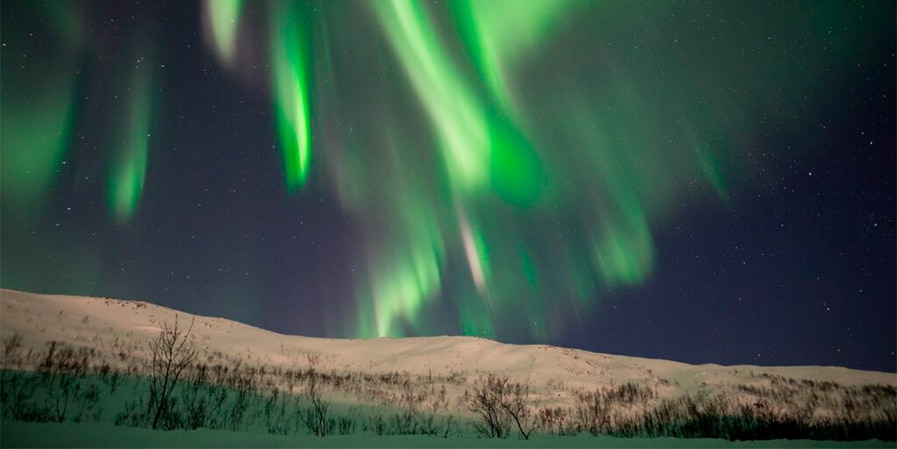
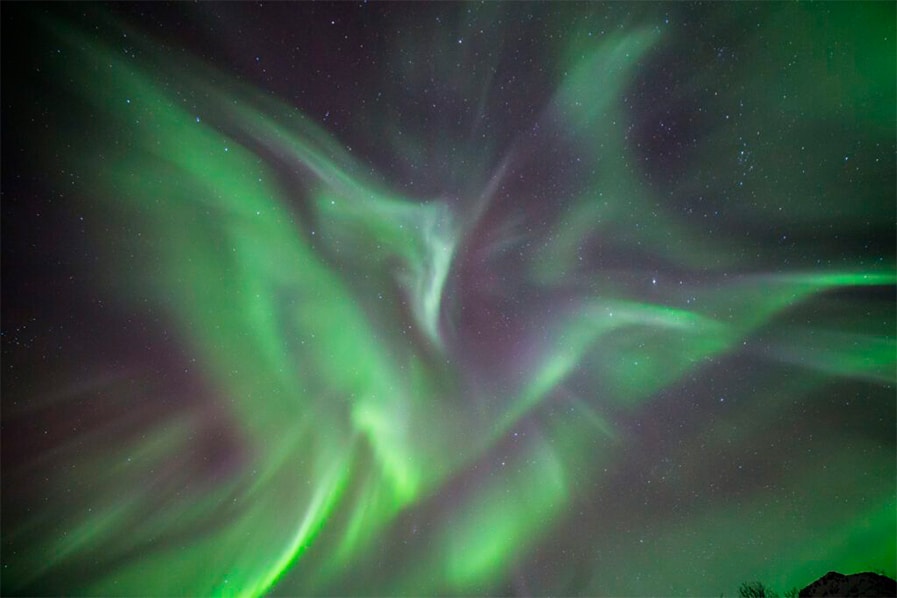
Are you keen on bringing home great photos of the northern lights? Then this article is for you.
You probably wonder what the best way to photograph the aurora borealis is, and how to capture the amazing pictures you see online and on Instagram. We gathered some pro tips for your use, hoping to help you take epic photos of your personal aurora experience! Getting away from light pollution is essential! Leave the city lights and join us on tour to sites with little or no artificial light. This will enhance your chance of capturing a beautiful image.
Gear recommendations:
Use a tripod! Using a tripod is essential. It will help you keep your camera completely still while taking long-exposure photos; note that even the slightest camera movement during the capture will cause blurry photos.
Use a fast wide-angle lens
Anything between 14mm and 24mm will be optimal.
Use exposure between 1-10 seconds
A general rule – the faster and stronger the aurora moves, the shorter the exposure. With weaker, slow-moving aurora, a longer shutter speed is better.
Be cautious with camera screen brightness at night – when reviewing images in the dark, your camera’s display can appear much brighter than the actual photo, creating the false impression that the image is well-exposed. Once transferred to a computer, the photos may turn out significantly darker than expected. To avoid this, reduce the camera’s screen brightness in the settings, if possible. Aim for enough light to illuminate the scene without overexposing highlights or introducing excessive noise. Achieving the right balance takes practice, but it greatly improves nighttime photography results
Adjusting aperture (F-number) wisely – while ultra-wide apertures like F1.2 are sometimes unnecessary, using around F1.4 can offer excellent results. On bright moonlit nights, even narrower apertures – such as F5 – can produce beautifully detailed photos, allowing for some flexibility depending on conditions. In urban environments, such as photographing a cityscape from a cable car, it’s best to avoid overly wide apertures or high ISO settings, as city lights can easily become overexposed. Striking the right combination of settings will help preserve detail and prevent unwanted glare.
Bring spare camera batteries!
In cold weather (-5 to -30 degrees Celsius is common on tour), both your phone and your camera may drain their battery quickly, even if the batteries were fully charged at the start of the night! It is always a good idea to bring with you extra batteries and a power bank.
Dress smart and stay warm
You will spend a lot of time outdoors while photographing the northern lights, so it is always a good idea to bring several layers of clothes (we recommend wool as the first layer), a warm hat, gloves, scarf and warm boots are all essential to keep you comfortable. The Arctic nights in Northern Norway can be very cold, and temperatures can easily drop to -30 degrees. P.S. we have warm winter suits that you can use on our trips for extra warmness!
Camera settings
Use manual settings (if you have them);
Use a timer or a remote shutter release;
High ISO settings (depending on the camera, anywhere between ISO 400 and 2000 is recommended);
Use manual focus;
Shoot in RAW file format to give you more options in post-processing.
Processed with VSCO with u4 preset
What if I want to use my phone?
Phones have become excellent alternatives to big professional cameras and will often give you better results if you are not very proficient as a photographer or do not have the right gear for astrophotography. New models of iPhones have automatic night settings, and so it is simply “point and click”, ps. remember to keep your phone as still as possible while shooting. Android phones often have manual settings and auto settings (follow guide for cameras above if you shoot manually), so we recommend experimenting and seeing what produces the best result for you. Phones are also able to capture the northern lights as film, be creative and make your own aurora movie. At Best Arctic, we have many different northern light options. You can choose from private and exclusive tours to classic chases by mini-bus or an evening tour to one of our comfortable camps!
Planning a winter trip to Tromsø means choosing between some of Northern Norway’s most memorable Arctic experiences. From chasing the Northern Lights to dog sledding through snowy landscapes, there is plenty to discover whether you are visiting for a long weekend or an extended stay. But how many days do you need in Tromsø during […]
Best northern light tours in Tromsø for groups of friends
Experiencing the Northern Lights in Tromsø with friends can become one of the highlights of a winter trip to Northern Norway. Whether you are celebrating a birthday or simply traveling together, an evening beneath the Arctic sky is an experience worth sharing. But which Northern Lights tour in Tromsø is best for groups of friends? […]
Book the Tromsø Airport Express and get 20% OFF a Northern Lights Tour
Book your Tromsø Airport Express transfer online and receive a 20% OFF promo code for selected Best Arctic Northern Lights tours. Your Arctic adventure can start as soon as you land in Tromsø. When you book the Airport Express online for your transfer between Tromsø Airport and Tromsø city centre (in either direction) you’ll receive […]
What to do in Tromsø with children during wintertime in 2026
Are you planning a family trip to Tromsø in winter 2026? There are plenty of things to do with children, from seeing the Northern Lights and meeting reindeer to dog sledding, whale watching, fjord cruises and Arctic wildlife experiences. The important part when planning Tromsø with children is choosing activities appropriate for their age. Some […]
Fishing is deeply connected to life in Northern Norway and winter is an amazing time to discover this Arctic tradition. You can head onto the Arctic fjords aboard a historic wooden boat or leave the coast behind to try fishing through the ice of a frozen lake. If you are looking for fishing tours from […]
Seeing the Northern Lights in Tromsø together can easily become one of the highlights of a couple’s trip to Northern Norway. But with so many different Aurora experiences available, choosing the right tour depends on whether you prefer a small group, extra comfort or a completely private evening. So, what are the best Northern Lights […]



 BOOK ONLINE
  BOOK IN PERSON